

Your Ultimate House Cleaning Schedule Template

Think of a house cleaning schedule template as your secret weapon against chaos. It’s a simple roadmap that breaks down an overwhelming list of chores into small, manageable tasks you can knock out without a second thought. For instance, instead of a vague goal like "clean the house," the template tells you, "On Monday, wipe down kitchen counters." It's how you stop small messes from turning into weekend-devouring projects.


Why a Cleaning Schedule Will Change Your Life

Let's be real. After a long week, the last thing anyone wants to face is a messy house. That feeling of dread, knowing you have hours of scrubbing, dusting, and vacuuming ahead of you, can kill your weekend vibe before it even starts. This guide isn't about adding more to your plate; it’s about giving you a smarter strategy to get your time back and actually enjoy your home.

When you have a plan, your whole approach to cleaning shifts. Instead of staring at one giant, insurmountable mess, you’re just tackling a few specific jobs here and there. For example, rather than seeing a dirty kitchen, you just see "wipe stove" on your list for Wednesday—a five-minute task. That change in perspective makes all the difference.

From Overwhelmed to In Control

Without a schedule, we tend to clean reactively. We scramble when the kitchen becomes a disaster zone or when guests are about to arrive. It's stressful, it's inefficient, and it never feels like you're truly on top of things. A schedule flips the script and puts you firmly in the driver's seat.

Here's what you really gain with a structured approach:

  • Less Stress: The mental weight of a never-ending to-do list just disappears when you know exactly what needs doing and when. No more Sunday evening panic about the state of the house.
  • More Free Time: Spreading the work out means you can say goodbye to those marathon cleaning sessions. A practical example is spending 20 minutes cleaning the bathroom on Monday instead of an hour on Saturday. Your Saturdays are yours again.
  • A Consistently Cleaner Home: Your space stays in a comfortable, "clean enough" state all the time, making it a place you actually want to relax in. This means you can say "yes" to a spontaneous friend visit without a 30-minute frantic tidying session.

The real magic of a cleaning schedule isn't just a tidier home—it's the feeling of control it gives you over your environment and your time. You stop serving your home and start making it serve you.

The Power of Small, Consistent Actions

The whole idea is to divide and conquer. Instead of a three-hour cleaning blitz on a Saturday, you might spend just 20 minutes each weekday focusing on a specific area.

It could look something like this:

  • Monday: Bathrooms (quick wipe of counters, scrub the toilets).
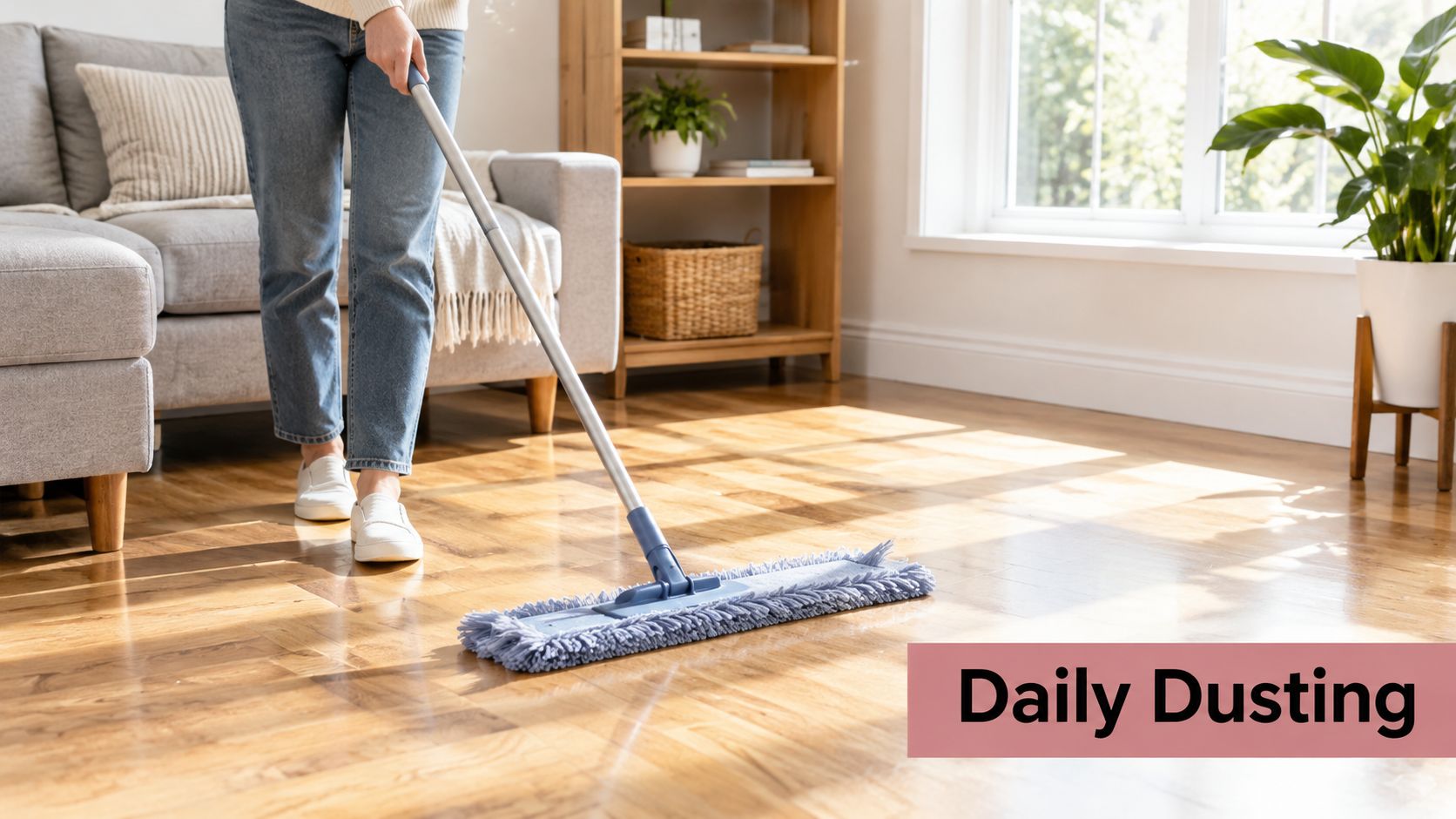
  • Tuesday: Dusting (all surfaces and furniture).
  • Wednesday: Kitchen focus (wipe down appliances, scrub the sink).

This simple routine prevents the gunk and grime from building up, which is what turns a quick wipe into a major project. Life is hectic enough as it is. There's a reason the global cleaning services market is projected to hit USD 823.6 billion by 2035—our time is more valuable than ever. A consistent schedule is your ticket to slashing that personal cleaning time and preventing small chores from becoming all-day events.

Ultimately, using a house cleaning schedule template is a powerful form of self-care. You're investing in your own peace of mind and protecting your most precious resource: your time. For more tips on keeping your home in great shape without all the stress, check out our guide to achieving cleaning success.

Find Your Perfect Cleaning Schedule Template

Let’s be honest: a one-size-fits-all cleaning checklist almost never works. Life is just too different for every person and every home. The real secret is finding a house cleaning schedule template that feels less like a strict set of rules and more like a natural rhythm for your week.

Below, you'll find a few of our go-to templates, each designed with a specific lifestyle in mind. Think of them as a starting point, not a final destination. The goal is to grab a plan that feels doable right now—one that reduces stress, not adds to it.

Feeling totally overwhelmed by the mess is usually the first sign you need a system. This little decision tree perfectly illustrates how a simple schedule can be your first step toward a calmer, more orderly home.

A house cleaning stress decision tree flowchart guiding users to get a schedule for tasks.

It’s all about turning that chaos into order with a clear plan. So, let's figure out which one is the right fit for you.

Which Cleaning Schedule Fits Your Life?

Feeling unsure where to start? This quick comparison breaks down which template might be your best bet based on your home, family, and the time you have to spare.

Schedule TypeBest ForTime CommitmentExample TaskDaily Tidiness PlanSmall homes, couples, work-from-home folks15-20 minutes dailyWiping down kitchen counters after dinnerWeekly Reset PlanBusy professionals, families with kids30-45 minutes per day, 5 days a weekCleaning all bathrooms on "Bathroom Monday"Monthly MaintenanceAll homeowners and renters (as an add-on)2-3 hours, one day per monthCleaning the inside of the oven and fridgeRotational Deep CleanAnyone wanting a deep clean without burnout1-2 extra hours per weekDeep cleaning the kitchen one week, bathrooms the next

Ultimately, the best schedule is the one you can stick with consistently. Look at your real-life week, not your ideal one, and choose the plan that aligns with it.

The Daily Tidiness Plan For Constant Calm

This one is for people who thrive on routine and would rather prevent a big mess than clean one up. It's a fantastic fit for smaller homes, couples, or anyone working from home who wants their space to feel consistently put-together. This isn't about deep scrubbing; it’s all about daily maintenance.

The time commitment is tiny—just 15-20 minutes a day.

Here’s what that looks like in real life:

  • Morning (5 mins): Make the bed as soon as you get up. Wipe the bathroom counter after you brush your teeth. Put breakfast dishes straight into the dishwasher.
  • Evening (10 mins): Do a quick living room reset—fluff pillows, fold throws. Wipe down kitchen counters. Take out the trash before it overflows.

This approach keeps your home in a constant state of "guest-ready" without ever demanding a huge chunk of your time. You're just building small, powerful habits.

The Weekly Reset For Busy Families

This is easily the most popular choice, and for good reason. It’s built for busy professionals and families with kids—basically, anyone whose weekdays are too slammed for more than the bare minimum. The Weekly Reset groups bigger tasks together on specific, themed days.

This kind of schedule saves you from facing a soul-crushing, whole-house cleanup every Saturday.

By assigning a focus to each day, you get rid of decision fatigue. You don't have to stand in the middle of a room wondering what to clean first. The schedule just tells you, which makes it so much easier to start.

For a great example of how to structure this, checking out a detailed weekly cleaning schedule template can give you more ideas. A common approach is to break the home into zones or task types.

A typical Weekly Reset might look like this:

  • Monday: Bathrooms (toilets, showers, sinks, mirrors, floors).
  • Tuesday: Dusting & Vacuuming (all rooms, just focus on surfaces and floors).
  • Wednesday: Kitchen Deep Dive (wipe down appliances, clean microwave, mop).
  • Thursday: Bedrooms (change sheets, clear clutter from nightstands, vacuum).
  • Friday: Catch-All & Floors (tidy up any loose ends, then vacuum/mop the main living areas again before the weekend).

The Monthly Maintenance Schedule For The Big Stuff

Let's face it, some jobs just don't need to be done every week. But if you forget them completely, you’ll notice. The Monthly Maintenance template is a simple add-on to your regular routine to make sure these deeper cleaning tasks get done.

This is where you tackle the things that cause long-term grime and buildup. I like to block off the first Saturday morning of the month for these.

Your monthly task list could include:

  • Clean the inside of the oven and microwave.
  • Toss the shower curtain and bath mats in the wash.
  • Wipe down all the baseboards and door frames.
  • Do a full clean-out of the refrigerator.

The Rotational Zone Plan For Deep Cleaning

If you love the idea of a truly deep-cleaned home but can't imagine sacrificing an entire weekend, the Rotational Zone plan is a game-changer. You simply divide your home into four or five "zones." Each week, you focus on deep cleaning just one zone, on top of your usual tidying.

By the end of the month, your whole house has been deep-cleaned from top to bottom, but without the usual burnout.

Here’s a sample breakdown of a Rotational Zone Plan:

  • Week 1 Zone: Kitchen & Dining: Deep clean appliances, organize the pantry, wash cabinet fronts, scrub the backsplash.
  • Week 2 Zone: Living Areas: Vacuum upholstery, wash interior windows, dust light fixtures and fans, pull out furniture to clean behind it.
  • Week 3 Zone: Bathrooms: Deep scrub tile grout, organize medicine cabinets, wash out trash cans, descale showerheads.
  • Week 4 Zone: Bedrooms: Wash pillows and duvets, flip mattresses, tackle closet clutter, dust high shelves and ceiling corners.

Picking the right house cleaning schedule template is your first real step toward a home that feels more organized and less stressful. For more quick wins, you can always explore our other house cleaning tips to power up your new routine. Just pick the template that fits your life today, and don't be afraid to tweak it as you go.

Making Your Cleaning Template Actually Work For You

A downloadable house cleaning schedule template is a brilliant starting point, but let's be honest—a generic checklist doesn't know about your golden retriever's shedding season or that your kitchen counter is the designated drop-zone for mail, keys, and backpacks. To make it truly useful, you have to make it yours.

This is where we get personal. It all starts with a quick, honest look around your own home. Think of it as a "home audit." Instead of getting overwhelmed by the entire house, you're just identifying the specific spots where chaos loves to congregate. These are your cleaning hotspots.

Man actively writing on a large wall calendar, organizing his schedule next to a bean bag.

This simple walkthrough helps you zero in on tasks that will make the biggest difference in how your home feels and functions. It's about working smarter, not harder.

Take a Quick Walk-Through

Grab a notepad or your phone and just walk through your house. You're not cleaning, just observing. For each room, ask yourself a few questions to pinpoint the high-traffic zones and mess magnets.

  • Where does clutter always seem to pile up? (Is it the kitchen island? The entryway table?)
  • Which floors get the dirtiest, the fastest? (Probably the mudroom or the main hallway.)
  • What surfaces are constantly covered in fingerprints or spills? (The stainless steel fridge, the sliding glass door.)
  • Any pet-specific messes? (Think fur on the sofa or nose smudges on the windows.)

This isn't about judging yourself; it's just about collecting data. Your answers become the building blocks for a schedule that solves your real-life cleaning headaches.

Tweak the Template to Fit Your Life

Once you know your home's quirks, it's time to edit that template. This is where you add, remove, and reassign tasks to match your reality. The goal is a plan that feels helpful, not like another thing to feel guilty about.

Scenario 1: The Family with PetsLet's say you have two dogs and a cat. A standard "vacuum floors" task on your weekly list just isn't going to cut it.

  • Add to Weekly Tasks: "Vacuum upholstery" (to tackle all that pet hair) and "Wipe down pet food area."
  • Add to Monthly Tasks: "Wash all pet beds and soft toys" and "Deep clean pet food bowls."

Scenario 2: The Work-From-Home ProIf your home office is command central, keeping it clean is about more than just appearances. Dust and germs can build up fast where you spend most of your day.

  • Add to Weekly Tasks (Maybe Twice a Week): "Wipe down desk, keyboard, and mouse."
  • Add to Monthly Tasks: "Organize and dust office shelving."

This kind of detail turns your schedule into a powerful tool for staying healthy and productive. For ideas on keeping your workspace fresh, check out our guide on using environmentally friendly house cleaning products.

Sharing the Load: Roommates and Partners

When you share your home, customizing a schedule becomes a team effort. To keep the peace and make sure things are fair, clarity is everything. If you've got roommates, a dedicated roommate cleaning schedule template can be a lifesaver for divvying up chores.

A great schedule doesn't just list chores; it assigns ownership. When everyone knows what they're responsible for, things get done with far less friction and resentment.

Instead of a vague task like "clean the kitchen," get specific. Maybe one person is on counter-wiping and trash duty, while another handles loading the dishwasher and mopping the floor. For a practical example, a shared house chart might say: "Sarah: Unload dishwasher (Mon, Wed, Fri). Ben: Wipe counters after dinner daily." This simple step avoids that classic "I thought you were going to do it" standoff.

Interestingly, this customization can also save you money. Without a clear plan, people often overspend by 25-30% on cleaning supplies, buying products for spots they rarely get to. A personalized template helps you use what you have more efficiently—a big deal now that cleaning product costs have risen by 12% annually. As more people switch to green cleaning, this trend continues to grow, as noted in market analysis from Fortune Business Insights.

By taking a few minutes to tailor your house cleaning schedule template, you turn it from a simple checklist into a dynamic plan that actually works for you, your family, and your home.

Making Your New Cleaning Habit Stick

So, you've downloaded a house cleaning schedule template. That’s the easy part. The real work—the part that actually makes a difference—is weaving that schedule into the fabric of your life until it becomes second nature. A pristine schedule is useless if it just gathers dust on the fridge.

The goal isn't a picture-perfect home overnight. It's about building a sustainable rhythm that keeps things tidy without causing burnout. We're aiming for consistency, not perfection. It’s all about integrating small, manageable tasks into your day so they feel less like chores and more like routine.

Close-up of a counter with a 'STICK TO IT' sign, digital device, plant, and cleaning bottles.

Use Habit Stacking to Your Advantage

One of the best tricks I've learned for building new routines is something called habit stacking. The idea is simple: you link a new, tiny cleaning task to something you already do automatically. By piggybacking the new action onto an existing one, you trick your brain into accepting it without a fight.

You're not trying to find extra time to clean; you're just tacking it onto something you were going to do anyway.

Here’s what this looks like in real life:

  • Already brush your teeth every morning? As soon as you're done, grab a cloth and give the bathroom sink and counter a quick wipe. It literally takes less than 30 seconds.
  • Can't function without your morning coffee? While it's brewing, use those few minutes to unload the dishwasher.
  • Take a daily shower? Right after you turn off the water, give the glass door and tiles a quick once-over with a squeegee. This small step prevents soap scum buildup and saves you from a massive scrubbing session down the road.

The Magic of the 15-Minute Tidy

Let's be honest, the thought of cleaning for an entire hour can be so overwhelming that you just... don't. This is exactly where the "15-minute tidy" shines. It’s not about deep cleaning; it's a focused burst of activity to make a noticeable dent in the clutter.

Set a timer for 15 minutes and go all-in on one small area. You will be shocked by how much you can get done. For example, you could focus just on the entryway: put away shoes, sort the mail pile, and sweep the floor. It's a fantastic way to beat procrastination because the task feels so small and achievable.

The point isn't to perfectly clean an entire room. It's simply to make it better in 15 minutes. That small win creates a powerful sense of accomplishment that fuels your motivation.

Get the Whole Family on Board

A cleaning schedule should never be a one-person show. For this system to truly work long-term, you need buy-in from everyone in the house. The secret is assigning tasks that are crystal clear, specific, and age-appropriate. A vague command like "clean your room" is just asking for an argument.

Get specific and break it down into concrete actions:

  • Little Kids (Ages 4-6): "Put your LEGOs back in the red bin." "Place your dirty PJs in the hamper." Simple, one-step jobs are perfect for them.
  • Older Kids (Ages 7-11): "Wipe down the dinner table after we eat." "You're in charge of feeding the dog every morning." They can handle tasks with a few more steps.
  • Teenagers: "Load and run the dishwasher on Tuesdays and Thursdays." "Take out the trash and recycling every Wednesday night." Give them real responsibility.

When everyone owns a piece of the puzzle, it builds a sense of teamwork. If you need more strategies for managing a busy home, check out some of our other helpful house cleaning articles.

What to Do When You Fall Off Track

Life gets in the way. You’ll have a crazy week at work, a kid will get sick, or you’ll just be too exhausted to care. You are going to miss a day—or maybe even a whole week—on your schedule. And that's okay.

Here’s the most important thing to remember: one missed day is not a failure.

The all-or-nothing mindset is the biggest enemy of consistency. Don't let a little slip-up make you feel guilty and give up entirely. For example, if you miss "Bathroom Monday," don't try to cram two days' worth of chores into Tuesday. The second you realize you've fallen off, just start again. Just pick up with today's task and keep moving forward. Progress, not perfection, is the real goal.

When To Combine Your Schedule With Professional Help

Your new house cleaning schedule template is a game-changer for keeping your home consistently tidy. It's perfect for tackling the daily clutter and weekly grime, stopping small messes from snowballing into overwhelming projects. But let's be realistic—even the most diligent schedule has its limits. Sometimes, what you really need is a full reset that goes far beyond routine maintenance.

That’s where professional cleaning services come in. Think of them not as a replacement for your efforts, but as a powerful partner. Your schedule is the essential upkeep that keeps things fresh day-to-day. A professional deep clean is the heavy-duty reset that gets into every nook and cranny, giving you a truly clean slate to work with.

The Perfect Partnership In Action

Imagine you're using your weekly checklist to stay on top of the counters, floors, and bathrooms. You're doing a great job preventing buildup and keeping your home functional and pleasant. But what about the tasks that never quite make it onto that list? The ones you know need doing but just can't find the time or energy for?

This is precisely the gap a professional service fills. They handle the time-consuming, physically demanding jobs that are so easy to put off.

Here’s a real-world example of how this partnership works:

  • Your Weekly Schedule: You manage the high-traffic tasks—vacuuming the main living areas, wiping down kitchen surfaces, scrubbing toilets, and keeping daily clutter at bay.
  • Aquastar's Monthly Deep Clean: Our team comes in to tackle the big stuff. We're talking about scrubbing all the baseboards, dusting high ceiling fans and light fixtures, pulling out appliances to clean behind them, and deep cleaning the inside of your oven.

This hybrid approach ensures your entire home gets the attention it deserves. Your daily efforts make the professional cleans more effective, and their deep cleans make your own maintenance feel faster and easier.

Clear Signs It’s Time To Call For Backup

Knowing when to bring in professional help is key to avoiding burnout and keeping your home in its best condition. Your schedule is great, but certain situations just call for an expert touch.

Keep an eye out for these common scenarios:

  • Preparing for a Big Event: Hosting a holiday dinner, a birthday party, or having family stay over? A professional clean takes a huge weight off your shoulders.
  • Post-Renovation Cleanup: Construction dust gets everywhere. A specialized service knows how to properly remove that fine dust from surfaces you wouldn't even think of.
  • Seasonal Deep Cleans: A "spring clean" or "fall reset" is the perfect time to have professionals deep clean carpets, wash windows, and scrub grout lines back to new.
  • You're Simply Overwhelmed: Life happens. If you’ve fallen behind and the mess feels insurmountable, a one-time deep clean is the perfect way to get back on track without the guilt.

The goal isn't to do everything yourself. It's to create a sustainable system that keeps your home clean and your stress levels low. Combining your personal efforts with professional services is the smartest way to achieve that balance.

The numbers back this up. Homes without a consistent schedule can harbor 3x more bacteria and pose 40% higher allergy risks. A simple weekly routine can slash those figures by 65%. For the 60% of US households with two working parents who spend around 12 hours weekly on chores, a template can reclaim up to 8 of those hours.

Integrating professional services builds on this. We've seen that 85% of our clients using bi-weekly packages report a 90% time savings on deep cleaning tasks. You can dive deeper into market trends like these from Cognitive Market Research.

By letting professionals handle the most demanding jobs, you free up your time and energy for what really matters. You can learn more about our additional house cleaning services to see how we can tackle everything from refrigerators to garages. It’s the ultimate strategy for a consistently beautiful home, minus the burnout.

Still Have a Few Cleaning Schedule Questions?

It’s one thing to download the perfect house cleaning schedule template, but it's another to actually put it into practice. You're bound to have a few questions pop up as you get started. Don't worry, that's completely normal.

Let's walk through some of the most common hurdles people face. Think of this as a quick chat to iron out those final details so you can feel confident jumping in.

How Long Should I Actually Spend Cleaning Each Day?

There's no magic number here, but a great target to aim for is 15-30 minutes of focused tidying every day. I'm not talking about a major deep clean. This is all about maintenance—wiping down counters after dinner, putting shoes back in the closet, and maybe running a quick vacuum over the entryway.

That little daily burst of effort is what stops small messes from snowballing into a weekend-long cleaning marathon. For your bigger weekly tasks, you can then block out an hour or two on whatever day works best for you.

Consistency is far more important than duration. A little effort every day feels much less daunting and does a better job of keeping your home in order than one huge cleaning session every Saturday.

What's the Best Way to Get My Family to Help Out?

Getting everyone on board is the secret to making any cleaning schedule stick. The key is to make it a team effort and be crystal clear about expectations. Start with a quick family huddle to explain the new plan and how it helps everyone—less time cleaning means more time for fun, right?

Then, you'll want to assign specific, age-appropriate chores. Vague requests are a recipe for frustration.

  • Instead of: "Clean your room."
  • Try: "Make your bed and put your toys in the bin."

When it comes to partners, try dividing up tasks based on what each person prefers (or at least, dislikes the least). You'd be surprised how effective a simple chart on the fridge with checkboxes can be. It makes progress visible and gives everyone, from kids to adults, a little hit of satisfaction.

How Often Should I Book a Professional Deep Clean?

As a general rule of thumb, scheduling a professional deep clean 2 to 4 times a year is a fantastic way to hit the reset button. It’s perfect for that big spring clean or getting the house ready before the holidays, tackling all the built-up grime your regular routine might miss.

That said, many of our clients prefer a recurring monthly or bi-weekly service. This keeps their home in a constant "deep cleaned" state, meaning they never have to think about those big, overwhelming tasks again. The best frequency really just comes down to your lifestyle, how much foot traffic your home gets, and how much you want to take off your own to-do list.

Should I Declutter Before Starting a Cleaning Schedule?

Yes, one hundred percent. Trying to clean a cluttered home is just plain frustrating. You’re not really cleaning surfaces; you’re just shuffling piles of stuff around. It's inefficient and feels like you're not making any real progress.

I always recommend tackling decluttering first, even if you just do a little bit at a time. A practical example would be dedicating 15 minutes before you start your cleaning routine to clear off just the kitchen counters. Put away the mail, the kids' school papers, and any stray items. Once you clear out the excess, you'll find your new cleaning routine is faster, easier, and so much more satisfying.


Ready to reclaim your time and enjoy a consistently clean home? The team at Aquastar Cleaning Services, LLC is here to help you create a perfectly balanced cleaning system. Get your personalized quote today!

What is deep house cleaning? A Complete, Easy Guide to a Pristine Home

Ever feel like your regular cleaning routine just isn't cutting it anymore? You wipe the counters, you vacuum the floors, but there's a lingering sense that your home isn't truly clean. That's where a deep house clean comes in.


Think of it this way: your weekly tidying is like making the bed. It keeps things looking neat and presentable on the surface. A deep clean is like flipping the mattress, washing the duvet, and vacuuming out every last dust bunny from underneath. It's a total reset for your home.

So, What's a Deep Clean, Really?

A deep clean is an incredibly thorough, top-to-bottom scrub of your entire living space. It’s designed to tackle the grime, dust, and gunk that builds up over time in all the places you don't normally look.

For example, a regular clean might involve wiping down the kitchen stovetop. A deep clean involves removing the burner grates and knobs to scrub them individually, degreasing the surface underneath, and cleaning the range hood filter above. It's a detailed, systematic process that gets into every nook and cranny, restoring your home to a like-new level of freshness.

The goal isn't just to make things look good; it's about creating a healthier environment. A proper deep clean focuses on:

  • Sanitizing High-Touch Zones: Think doorknobs, light switches, and cabinet pulls—all the spots that collect germs get a thorough disinfection. For instance, we use a disinfectant solution to wipe down not just the face of the light switch plate, but the switch itself and the surrounding wall area.
  • Blasting Through Buildup: This means finally getting rid of that stubborn soap scum on the shower door, the hard water stains on faucets, and the greasy film on the kitchen backsplash. A practical example is using a specialized cleaner to dissolve the white, chalky mineral deposits at the base of your bathroom faucet.
  • Tackling Forgotten Areas: We’re talking about hand-wiping baseboards, cleaning out window tracks, and dusting every blade on your ceiling fans. For example, instead of a quick pass with a duster, we use a damp microfiber cloth on each baseboard to physically remove caked-on dust.
  • Freshening Your Air: By removing months of caked-on dust, pet dander, and allergens from forgotten corners, you're not just cleaning—you're improving your home's air quality.

It's no surprise that more people are seeking out this level of clean. The global market for deep cleaning services is currently valued at a whopping USD 11,230 million and is only expected to grow as more of us prioritize a truly healthy home.

A deep clean isn’t just about making your home look good; it’s about making it feel healthier from the inside out. It's the difference between a surface shine and a foundational reset.

At Aquastar Cleaning Services, we specialize in delivering this meticulous level of care to homeowners across North Atlanta. Many of our additional house cleaning services, like our move-in/move-out cleans, offer a similar, incredibly detailed approach.

Your Room-By-Room Deep Cleaning Checklist

It’s one thing to talk about deep cleaning, but it’s another thing entirely to roll up your sleeves and do it. So, where does all that extra effort actually go? Let's walk through your home, room by room, with a checklist that shows you exactly what turns a space from "tidy" to truly, sparklingly clean.

Think of it this way: your regular cleaning keeps things manageable, but a deep clean is what gets your home to that next level of health and freshness.

Flowchart illustrating the cleaning concept, showing regular and deep cleaning leading to a healthy home.

A deep clean bridges the gap between basic upkeep and a home that genuinely feels good to be in, because it tackles the grime and allergens that build up over time.

The Heart of the Home: The Kitchen

Let's be honest, the kitchen is usually the biggest job. Between cooking grease and hidden crumbs, it needs some serious attention to get it properly sanitized. A deep clean focuses on all the spots that get missed during a quick daily wipe-down.

  • Clean Behind and Under Appliances: This is a big one. For example, we carefully pull out the fridge and stove to sweep and mop the floor underneath, capturing spilled food and dust that has accumulated for months. We also wipe down the sides of the appliances and the walls they were hiding.
  • Degrease Cabinet Fronts: Using a good degreaser, we wipe down every cabinet and drawer face. A practical example is paying special attention to the cabinets above the stove, where cooking grease tends to settle and become sticky.
  • Scrub the Backsplash and Grout: We cut through that greasy film on your backsplash and use a small, stiff brush to get stained grout lines looking new again, especially behind the sink and stove areas.
  • Clean Inside the Oven and Microwave: The classic deep cleaning task! This means removing the racks, scrubbing the interiors to remove baked-on food, and getting the glass doors so clean they sparkle.
  • Descale the Sink and Faucet: Hard water stains and mineral deposits are no match for a good descaling. For example, we’ll soak a cloth in a descaling solution and wrap it around the faucet base for 30 minutes to dissolve the buildup.

Here's a pro tip for the kitchen: don't forget the range hood filter. It's so easy to overlook, but a clogged, greasy filter is a fire hazard and makes your fan less effective. Soaking it in a solution of hot water and degreaser can make it good as new.

The Sanctuary: The Bathrooms

In bathrooms, the deep clean battle is all about sanitation and tackling moisture-related problems like soap scum, mildew, and hard water buildup. It goes way beyond just wiping the mirror and toilet.

  • Scrub Tile Grout: Whether on the floor or in the shower, we use a powerful grout cleaner and a brush to eliminate discoloration. For example, this transforms the dark, grimy lines in a shower corner back to their original light color.
  • Descale Shower Heads and Faucets: To get your water pressure back and clear out bacteria, we'll unscrew the shower head and soak it in vinegar. We do the same for faucet aerators, which often get clogged with mineral deposits.
  • Deep Clean the Exhaust Fan: With the power off, we take down the cover and vacuum out all the dust and lint buildup. A clean fan is critical for preventing moisture and mildew problems.
  • Wash the Shower Curtain and Liner: Most fabric curtains and plastic liners can go right in the washing machine on a gentle cycle. It’s an easy way to get rid of ugly soap scum and mildew.
  • Wipe Down All Cabinetry: We empty out the vanity and medicine cabinet to wipe down every surface, inside and out—like removing old toothpaste drips from inside a drawer—before putting everything back neatly.

The Relaxation Zones: Living Room and Bedrooms

In these spaces, the enemy is dust. Dust and allergens love to hide in soft furnishings, high corners, and all those forgotten nooks and crannies. A deep clean here is a huge step toward better indoor air quality.

For more great ideas on keeping your spaces fresh, check out our complete list of house cleaning tips that covers everything from daily habits to bigger seasonal tasks.

  • Move Furniture to Clean Underneath: You won't believe the dust bunnies that live under sofas, beds, and armchairs. We move everything to vacuum and clean the floor thoroughly, finding everything from lost socks to pet toys.
  • Vacuum Upholstery and Curtains: Using the right attachments, we go over every inch of your sofas, chairs, and even your mattress. A practical example is using the crevice tool to get deep into the sofa cushions where crumbs and pet hair hide.
  • Wipe Down All Woodwork and Trim: This is where the detail work shines. We hand-wipe every inch of your baseboards, window sills, door frames, and any other trim, removing scuff marks and layers of dust.
  • Dust Light Fixtures and Ceiling Fans: We carefully clean chandeliers, lampshades (inside and out), and every single blade of your ceiling fans.
  • Clean Window Interiors and Tracks: After washing the inside of the glass, we get into the window tracks with a vacuum and damp cloth to clear out all the accumulated dirt and dead insects.

This top-to-bottom approach makes sure nothing gets missed. It’s how we revitalize your home, leaving it feeling healthier, fresher, and so much more pleasant to live in.

How Often Does Your Home Need a Deep Clean?

When it comes to keeping your house in order, timing is everything. While your regular cleaning routine keeps things tidy on the surface, knowing when to schedule a deep house cleaning is what stops small messes from snowballing into major projects. Think of it as essential maintenance for your home.

A cleaning schedule calendar, spray bottle, green towel, and notebooks for home organization.

For most homes, calling in the pros for a deep clean once or twice a year hits the mark. This frequency is usually enough to tackle the buildup that everyday life leaves behind.

Common reasons to schedule a deep clean include:

  • Seasonal Refreshes: The classic "spring cleaning" isn't just a tradition; it's the perfect chance to clear out the dust and stale air from a long winter. For instance, cleaning all the window sills and tracks to remove winter grime before opening them for the spring.
  • Hosting Big Events: If you've just hosted a holiday dinner, a big family get-together, or a party, your home probably needs a serious reset. A practical example is deep cleaning the guest bathroom and scrubbing sticky spots off the kitchen floor.
  • Major Life Changes: Moving into a new place, finishing a messy home renovation, or getting your house ready to sell are all prime times for a comprehensive, top-to-bottom scrub.

Should You Deep Clean More Often?

While an annual or semi-annual schedule is a great rule of thumb, it's not one-size-fits-all. Some homes and lifestyles simply need more attention.

For instance, a busy household with several pets and young children will see dander, allergens, and crumbs build up far quicker than a home with just one or two adults. In this case, a deep clean might be needed every three to four months to manage pet hair under furniture and sticky fingerprints on walls and doors.

"If you have pets and kids, a quarterly deep clean can drastically reduce allergens, dander, and hidden messes in carpets and furniture."

A true deep clean also goes beyond what you can see, improving things like your home's air quality. Knowing how often you should have your HVAC system cleaned, for example, is a key part of maintaining a genuinely clean environment.

Ultimately, finding the right frequency keeps your home feeling fresh and healthy all year long, giving you total peace of mind.

Understanding the Cost of a Deep Clean

So, let's talk about what a deep clean actually costs. When you hire a professional for a deep house clean, you’re not just paying for a quick wipe-down; you’re investing in a serious home reset. Knowing how that price is put together helps you see the true value and budget for it.

Unlike a standard cleaning, a deep clean quote isn't a one-size-fits-all number. It’s tailored specifically to your home.

The Main Factors That Shape Your Quote

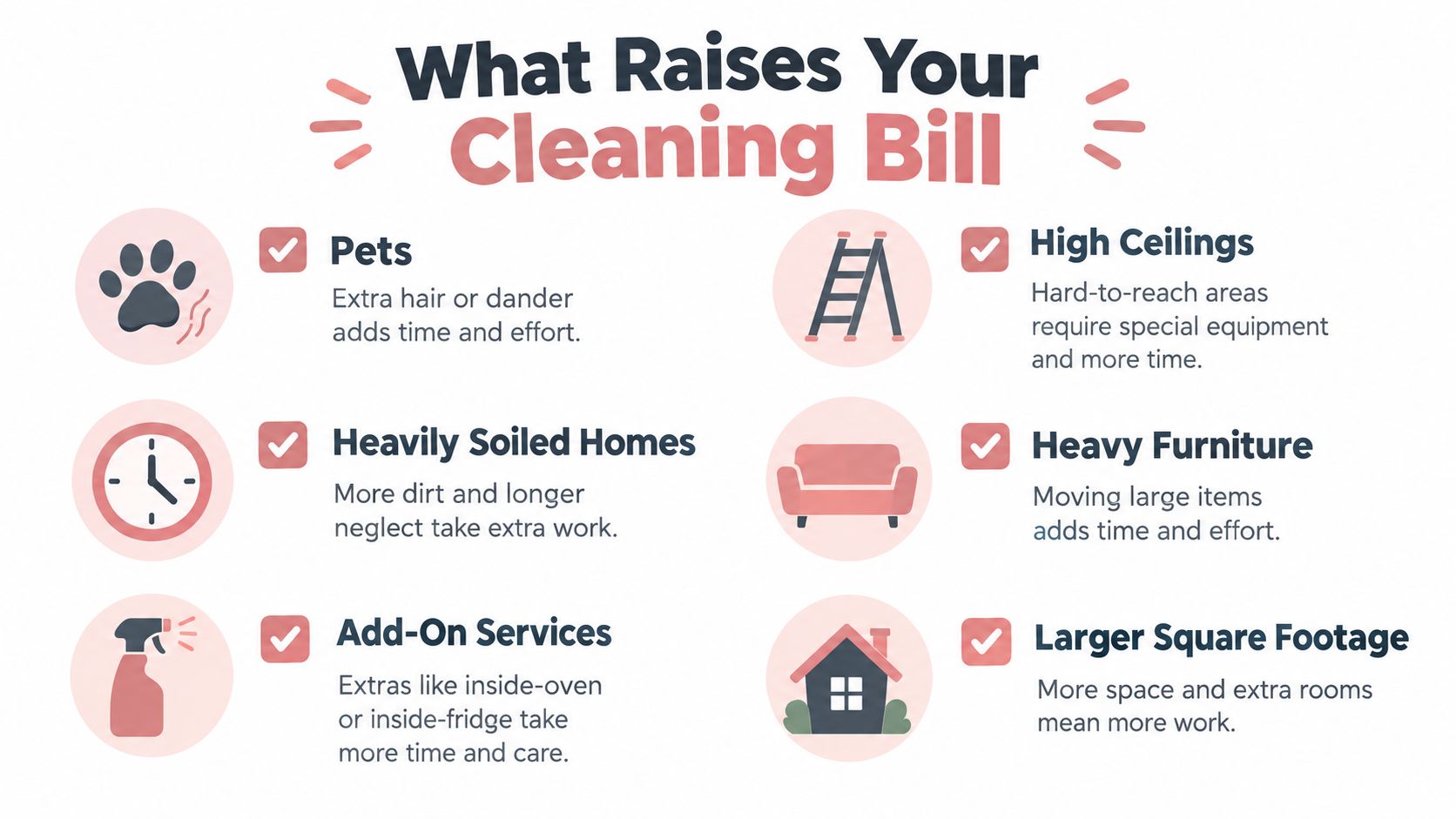
The final price isn't just a random figure. It’s a careful calculation based on a few key things that tell us how much time and elbow grease our team will need to put in.

  • Home Size (Square Footage): This is the big one. A larger home naturally has more ground to cover—more floors to scrub, more baseboards to wipe, and more surfaces to dust. For example, a 3,500 sq ft home will cost more than a 1,500 sq ft apartment simply due to the increased surface area.
  • Number of Bathrooms: Bathrooms are the most time-consuming rooms in any home, hands down. A home with four bathrooms will have a higher quote than a home with two, as each requires detailed grout scrubbing, descaling, and sanitation.
  • The Starting Point: Let’s be honest—a home that’s had regular upkeep will be a different job than one with a lot of built-up dust, grime, or kitchen grease. For example, a kitchen with a thick layer of grease on the cabinets will take significantly longer than one that is wiped down weekly.

A good, transparent quote should break everything down for you. The whole point is to match the service to what your home actually needs, so you’re only paying for the work that gets done.

How Add-Ons Affect the Price

Beyond the standard top-to-bottom scrub, you might want a few extra tasks tackled. These add-ons are priced separately because they require specific tools, products, and a good chunk of extra time. Thinking about these details can be similar to understanding the different factors that go into the professional rug cleaning cost, where specific treatments and conditions also adjust the final price.

Let's use a real-world example: a 2,500 sq ft home in Alpharetta. The base price for a deep clean would cover all the essentials we’ve talked about. But if you decide you also want the oven and fridge detailed, the quote will reflect that extra work.

Here are some common add-ons that can adjust your final price:

  • Cleaning the inside of the oven
  • Washing out the interior of your refrigerator
  • Cleaning inside all kitchen cabinets
  • Washing interior windows

At Aquastar Cleaning Services, we believe in being upfront. We give you a clear, personalized estimate that details every part of the cost. That way, you know exactly what you’re paying for and can choose a plan that perfectly fits your home, budget, and expectations.

Should You Do It Yourself or Hire a Professional?

Alright, you're sold on the idea of a deep clean. Now for the million-dollar question: should you roll up your sleeves and tackle it yourself, or is it time to call in the pros? Honestly, there’s no single right answer. It really comes down to what you value more—your time or your money.

Two people, a man and a woman, performing house cleaning tasks, representing DIY vs. professional services.

The DIY Deep Clean Experience

Going the DIY route is the obvious budget-friendly choice, but don't mistake "cheaper" for "free." You'll still need to stock up on specialized cleaning supplies, the right kind of brushes, and maybe even rent some equipment.

But the biggest investment by far is your time. We're talking about a full weekend, easily.

When you're the one in charge, you get to set the pace and focus on what matters most to you. The downside? It's hard, physical work. For example, that soap scum on your shower door might take you an hour of intense scrubbing with a store-bought cleaner. You can definitely get it done, but it often takes way more elbow grease than people expect.

The biggest cost of a DIY deep clean isn't the supplies—it's your time. A full top-to-bottom clean can easily consume 8-12 hours of your weekend, a commitment many busy homeowners find difficult to make.

The Professional Service Advantage

Hiring a professional service like Aquastar Cleaning Services completely changes the game. Yes, it's a financial investment, but what you’re really doing is buying back your weekend and guaranteeing a truly exceptional result.

Professionals show up with an arsenal of commercial-grade equipment and powerful, effective cleaning solutions you just can't find on a supermarket shelf.

More importantly, they bring expertise. Remember that shower door that took you an hour? A pro team with the right tools and techniques can make it sparkle in just 15 minutes. They know exactly how to degrease a grimy kitchen vent or sanitize bathroom grout without causing any damage. You can read more about Aquastar Cleaning Services to see how our experienced team makes the difference.

To make the choice a bit clearer, here’s a quick side-by-side comparison.

DIY vs Professional Deep Cleaning

FactorDIY Deep CleanProfessional Service (Aquastar)CostLower upfront cost for supplies.Higher cost, but it covers labor, expertise, and all supplies.TimeA big commitment—plan on a full day or weekend.Zero time commitment from you. Just come home and enjoy.EffortPhysically demanding and exhausting.Absolutely no physical effort required from you.ResultsGood, but it's easy to miss tough spots or run out of steam.A consistent, floor-to-ceiling clean that's hard to replicate.EquipmentLimited to whatever you can buy at the store.We use professional-grade tools and specialized solutions.

Ultimately, choosing a professional service means you can walk out the door in the morning and return to a home that feels brand new, without ever having to lift a finger. It's the ultimate reset button for your living space.

Your Local Deep Cleaning Experts in North Atlanta

Ready to get back your weekend and walk into a home that feels brand new? A professional deep clean does more than just tidy up—it creates a healthier, less stressful space so you can focus on what truly matters.

For over 25 years, Aquastar Cleaning Services has been the go-to team for homeowners all across North Atlanta. Our experienced crews are known for delivering incredible results, and we back up every single job with a satisfaction guarantee you can trust. We’re proud to serve our neighbors in Kennesaw, Marietta, Roswell, Alpharetta, and beyond.

Let us tackle the grime so you don't have to. We bring the right tools, the elbow grease, and an eye for detail to give your home that top-to-bottom refresh it deserves.

Getting started is easy. Just give us a call or visit our website for a free, no-pressure estimate designed specifically for your home. We also offer specialized house cleaning services in Sandy Springs and the surrounding communities. It’s time to take the next step toward a pristine home—let Aquastar handle the rest.

Got Questions About Deep House Cleaning? We've Got Answers

It's totally normal to have a few questions floating around, even after getting the full rundown. Let's clear up some of the most common ones so you know exactly what to expect when you book a deep clean.

How Long Is This Going to Take?

That’s the million-dollar question, and the honest answer is: it depends. The total time really comes down to the size of your house, its current condition, and how many cleaners are on the team.

Just to give you a ballpark figure, a two-person crew can typically deep clean a 2,000 sq ft home in about 4 to 6 hours. Of course, if the home is larger or needs a lot of extra attention—for example, if there's significant kitchen grease or soap scum buildup—it could certainly take a bit longer to get everything shining.

Do I Need to Supply Anything?

Nope, not a thing. When you hire a professional company like Aquastar Cleaning Services, we show up with everything we need.

We bring our own arsenal of high-quality cleaning products and professional-grade equipment, from powerful vacuums to tough-on-grime degreasers. Have a preference for green cleaning? Just let us know—we're happy to use eco-friendly products.

Is a Deep Clean Just Another Name for a Move-Out Clean?

They're very close cousins, but not identical twins. A move-out clean is specifically designed to get an empty home ready for the next person.

A practical example of the difference is that a move-out clean always includes cleaning out every single empty cabinet, drawer, and appliance (think oven and fridge). These tasks can be added to a regular deep clean by request, but they're standard practice for a move-out service because the home is vacant. Feel free to dig into our other house cleaning articles for more details on all our services.


Ready to walk into a home that feels completely refreshed? The team at Aquastar Cleaning Services is standing by to give your space the top-to-bottom clean it deserves. Head over to our site to get your free, personalized estimate today: https://aquastarcleaning.com.

A Practical Guide to Clean Ceramic Tile Floors and Walls

Ceramic tile is a wonderfully durable choice for any home, but keeping it looking its best takes a little more than a quick wipe-down now and then. The secret to sparkling tile is actually pretty simple: stay on top of the grit and grime with regular sweeping, and give it a weekly mop using a pH-neutral cleaner. This simple routine is your best defense against the slow, sneaky buildup that can make even the most beautiful floors look dull. For example, think about the high-traffic path from your back door to the kitchen; just sweeping up crumbs and dirt daily prevents that grit from being ground into the tile's finish every time someone walks by.


Keeping Your Ceramic Tile Looking Brand New

There's a reason you see ceramic tile everywhere; it's a huge global industry valued at over USD 250 billion. For you as a homeowner, that just means your tile is an investment worth protecting. With the right care, those tiles can easily last 50 years or more, and consistent cleaning is the key to preventing common headaches like mildew and dingy grout.

This guide isn't about generic tips you've heard a thousand times. We're going to get practical and talk about real-world situations. I'll walk you through how to deal with everything from daily dirt in a busy kitchen to that stubborn soap scum that loves to build up in the shower. The goal here is to give you techniques that actually work.

Your Path to Pristine Tile

We'll cover a complete care strategy, so you'll know exactly what to do and when.

  • Routine Cleaning: We'll start with the simple, effective habits that make the biggest difference day-to-day. A practical example is sweeping the kitchen floor each evening after dinner to pick up food particles before they get sticky and hard to remove.
  • Deep Cleaning: Then, we’ll get into the nitty-gritty of tackling tough stains and bringing back that original shine, like removing the yellowed, greasy film on the backsplash behind your stove.
  • Grout Care: And of course, we can't forget the grout—I’ll show you how to brighten those lines and keep them looking fresh. Imagine turning the dark, stained grout in your entryway back to its original light gray color.

Think of this as your go-to manual for mastering ceramic tile care, packed with insights to protect your floors and walls. For a few more expert tricks to add to your cleaning arsenal, check out these 5 amazing tips for cleaning tile.

The right cleaning methods do more than just make your tile look good; they create a healthier home. Opting for eco-friendly, biodegradable products is a huge part of this, as they’re much safer for kids, pets, and anyone with sensitivities.

This is especially critical in places like kitchens and bathrooms, where hygiene is paramount. You can dive deeper into the benefits in our guide to environmentally-friendly house cleaning. By making these small changes, you're not just cleaning—you're ensuring your tile remains a beautiful, long-lasting feature of your home.

Gathering Your Essential Tile Cleaning Toolkit

A collection of cleaning tools including a mop, spray bottle, and sponges on a tiled floor.

Before you can get those ceramic tiles sparkling, you need to assemble the right gear. Having everything ready to go makes the whole process faster and way less of a chore. You don't need a closet full of fancy gadgets, either—just a few reliable tools will do the trick for most jobs.

Think of these as your go-to items for daily and weekly upkeep. They’re your first line of defense against dirt, dust, and grime.

  • Microfiber Mop: If you’re still using a classic string mop, it's time for an upgrade. A flat-head microfiber mop is a game-changer because its fine fibers actually trap and lift dirt instead of just pushing it around. For example, it will pick up pet hair in one pass instead of leaving behind wet clumps.
  • Soft-Bristle Brush: This is your best friend for getting into grout lines. Steer clear of wire brushes, as they can easily scratch your tile or damage the grout. An old toothbrush is perfect for tight spots, like scrubbing the grout behind a faucet.
  • Spray Bottle: A basic, reusable spray bottle gives you total control when applying cleaning solutions, letting you target specific spots without soaking the whole floor. This is ideal for cleaning up a small spill in the kitchen without having to mop the entire room.

Choosing Your Cleaning Solution

The cleaner you use is just as important as the tools. While there are plenty of powerful commercial cleaners out there, simple DIY solutions are often just as effective—and they're usually gentler on your tiles and safer for your home.

Here's a quick comparison of common DIY and commercial tile cleaners to help you choose the right solution for your needs.

DIY vs Store-Bought Tile Cleaner Comparison

Cleaner TypeBest ForProsCons / CautionsVinegar & Water (50/50)Everyday grime, light grease, hard water spots.Inexpensive, effective disinfectant, eco-friendly.Acidic; can damage unsealed or colored grout over time.Baking Soda PasteStubborn stains, scuff marks, grout cleaning.Gentle abrasive, natural deodorizer, great for spot-treating.Can leave a slight residue if not rinsed thoroughly.Mild Dish Soap & WaterRoutine floor mopping and general surface cleaning.Safe for most surfaces, cuts through grease well.Can leave a slippery film if too much is used.pH-Neutral Commercial CleanerSealed grout, delicate or high-gloss tiles, heavy-duty cleaning.Formulated for tile safety, often no-rinse, very effective.More expensive, may contain harsher chemicals.

A classic homemade cleaner made from a 50/50 mix of distilled white vinegar and water is fantastic for cutting through everyday grime. Think about those little grease splatters on the kitchen backsplash after making dinner—this solution cuts right through them. Just be mindful of unsealed grout, as the acid in vinegar can slowly eat away at it.

For tougher, stuck-on messes, a simple paste of baking soda and water works wonders. Picture a sticky juice spill that’s dried onto the floor. Spreading this paste over the spot and letting it sit for a few minutes will help lift the stain without scratching your tile’s finish.

Choosing eco-friendly cleaners isn’t just about being green. It can actually extend your tile's life by up to 25% by preventing the chemical residue that dulls the finish over time.

Of course, sometimes a store-bought cleaner is the right call. If you go this route, look for a pH-neutral formula made specifically for tile. It's the safest bet for protecting delicate finishes and sealed, colored grout. For more real-world advice, you can check out some of our other house cleaning tips.

Your Simple Daily and Weekly Cleaning Routine

A person cleans a glossy brown tiled floor with a mop, buckets nearby, and

Keeping your ceramic tile looking brand new isn’t about spending hours on your knees scrubbing. The real secret is consistency. A little bit of daily and weekly attention prevents the kind of deep-set grime that makes you want to give up and call in the pros.

Think of it like this: every tiny piece of dirt, sand, and grit that gets tracked into your home acts like sandpaper on your floor. Under every footstep, those particles are slowly scratching and dulling the tile's protective glaze. A quick sweep or vacuum each day stops that damage before it even starts.

For instance, picture your entryway after a rainy day. Instead of letting that tracked-in mud and debris sit, just grab a vacuum with a soft brush attachment. A two-minute pass lifts away all those abrasive bits before they get ground into your beautiful tile and grout.

Mastering The Weekly Mop

When it's time for your weekly mop, the goal is simple: lift the dirt completely off the floor, don't just push it around. This is where the two-bucket method, a trick professionals swear by, makes all the difference.

It’s a simple but brilliant technique that ensures you're always using clean water and not just spreading grime.

  • Bucket One: Fill this with your cleaning solution. For example, a gallon of warm water with two tablespoons of mild dish soap.
  • Bucket Two: This one is just for clean, plain rinse water.
  • The Process: Dip your mop into the cleaning solution, mop a small 4x4 foot section of the floor, and then—this is the key—rinse the dirty mop in the second bucket before you ever put it back into your cleaning solution.

This one small adjustment is a game-changer. It prevents that hazy film that often appears after mopping, which is really just a thin layer of dirty water left to dry. If you prefer a natural approach, a vinegar solution works wonders. We have a great guide on four more ways to clean your home with distilled vinegar that you might find helpful.

The durability of well-maintained tile is remarkable. Clean, properly sealed ceramic tiles can achieve a wear resistance rating (PEI) of up to 5, meaning they can withstand over 20,000 footfalls annually without showing wear.

This incredible resilience is why 82% of homeowners choose tile for high-traffic areas like kitchens and bathrooms. Because its surface isn't porous, it's a breeze to clean with simple, biodegradable solutions, which can reduce a household’s reliance on harsh chemicals by as much as 70%. You can discover more insights about the ceramic tile market on mordorintelligence.com.

Deep Cleaning Tile To Banish Stubborn Stains

A hand wearing a green sleeve scrubs dirty green and red ceramic tiles with a blue brush, creating foam.

Sometimes, your weekly once-over with the mop just doesn't cut it. Over time, a deep-seated layer of grime can build up, leaving your tiles looking dull and lifeless. When that happens, or when you’re facing down a stain that refuses to budge, it’s time to roll up your sleeves and go a little deeper.

This isn't a weekly chore. For most floors, a really thorough deep clean every few months is all you need. That said, you’ll probably find yourself tackling tough spots in high-traffic zones like kitchens and bathrooms a bit more often.

Targeting Specific Stains with DIY Pastes

Let’s talk about one of the most common culprits: the kitchen backsplash behind the stove. Splattered cooking grease bakes on over time, creating a sticky, yellowish film that a simple spray-and-wipe won't touch.

For a problem like this, a simple baking soda paste works wonders.

  • Whip up the paste: Just mix about half a cup of baking soda with a few tablespoons of warm water. You're aiming for a thick, spreadable consistency, almost like toothpaste.
  • Apply and let it sit: Smear the paste right onto the greasy tiles and grout. Now, walk away. Give it at least 15-20 minutes to work its magic and break down that stubborn grease.
  • Scrub and rinse: Grab a soft-bristle brush and gently scrub the area in small circles. You’ll feel the grease starting to lift. Wipe everything down with a damp cloth and give it a final, clean rinse.

In the bathroom, the classic enemy is soap scum on shower walls. That chalky, white buildup is a stubborn mix of soap, hard water minerals, and body oils. A quick spray of white vinegar can often dissolve it without needing any harsh chemicals.

A huge part of effective cleaning is patience. Don't be afraid to let your cleaning solutions do the heavy lifting for you. Giving a paste or spray time to work means you can scrub less and still get better results.

Reviving Discolored Grout

Dingy, stained grout can make even the cleanest tile look old and tired. Years of foot traffic and spills can turn crisp white lines into a grimy shade of brown. But you don't have to spend hours on your knees scrubbing for a mediocre result.

The secret weapon here is an oxygen bleach solution. Unlike harsh chlorine bleach, it's color-safe and cleans by releasing tiny oxygen bubbles that power stains right out of porous grout.

  • First, mix the solution according to the product's directions, usually by dissolving the powder in hot water.
  • Next, carefully pour or brush the solution directly onto the grout lines. Let it bubble away for about 10-15 minutes.
  • Then, give the lines a light scrub with a dedicated grout brush (or an old toothbrush). You'll be amazed at how easily the stains lift.
  • Finally, rinse the entire area with a mop and clean water to wash away any leftover cleaner and all that loosened grime.

Harnessing the Power of Steam

If you're looking for a truly powerful, chemical-free deep clean, a steam cleaner is an fantastic tool. Steam uses high-temperature vapor to sanitize surfaces, blasting away dirt that's become embedded in both the tile and the grout. It’s a great option for families with kids, pets, or allergy sufferers because it kills 99.9% of germs and bacteria with zero chemical residue.

This method is especially effective on textured tiles that have little crevices where dirt loves to hide. A quick word of caution: make sure your grout is sealed and in good shape before you start. High-pressure steam can sometimes damage old, crumbling grout.

While a good deep clean can be a satisfying DIY project, there are times when calling in a professional is the smarter move. For bigger, more overwhelming jobs, you can learn more about our additional house cleaning services and let us tackle the challenge for you.

Common Tile Cleaning Mistakes To Avoid

A person mops red and brown ceramic tiles outdoors next to green grass, with text 'COMMON MISTAKES'.

It’s surprisingly easy to do more harm than good when cleaning ceramic tile. Even with the best intentions, a few simple mistakes can leave you with dull, grimy floors—or worse, permanent damage. By steering clear of these common pitfalls, you'll not only protect your investment but also get that sparkling finish you’re after.

One of the biggest blunders I see is people grabbing the wrong cleaner. Maybe you have an oil-based wood floor cleaner handy and think, "What's the harm?" The problem is that it leaves behind a sticky residue that acts like a magnet for dust and dirt. Your floors will actually get dirty faster.

Another classic mistake is getting too aggressive with scrubbing. When faced with a stubborn scuff mark, it’s tempting to reach for something like steel wool. But that’s a one-way ticket to ruining your tile’s glaze. Once you scratch that protective surface, those tiny abrasions will trap dirt forever and create a permanently dull spot.

The Dangers of The Wrong Solution

Even popular DIY cleaners can backfire if you're not careful. For instance, while vinegar is a great natural cleaner, its acidic nature can be a real problem for your grout if the solution is too strong or used too often.

Over time, the acid in undiluted or strong vinegar solutions can break down the grout sealant and then begin to erode the grout itself. This can lead to crumbling grout and potential water damage beneath the tiles.

Finally, a major reason for a streaky, cloudy finish is just letting the floor air-dry after mopping. All you're doing is allowing a thin film of dirty water and cleaning residue to dry right back onto the surface. No wonder it looks hazy!

Here’s a quick rundown of what not to do and what to do instead:

Common MistakeThe Damaging OutcomeThe Better WayUsing Steel WoolCreates permanent, fine scratches that dull the tile's finish and trap dirt.For tough spots, use a non-abrasive scrub sponge or a soft-bristle brush with a baking soda paste.Air-Drying Dirty Mop WaterLeaves behind a cloudy, streaky residue that dulls the entire floor.After mopping, go over the floor with a clean, damp mop, then dry it immediately with a microfiber towel.Applying Oil-Based CleanersCreates a sticky film that attracts and holds onto new dirt and dust.Stick to a pH-neutral cleaner made for tile or a simple, properly diluted vinegar and water solution.

When to Call in the Pros for a Tile Deep Clean

Look, keeping up with regular cleaning is the absolute best way to maintain your tile floors. But let's be honest, sometimes your best efforts just don't cut it anymore. Knowing when to wave the white flag and call for backup can save you a ton of frustration and get you a clean that home equipment simply can't deliver.

This isn’t about admitting defeat; it’s about working smarter.

Think about that high-traffic entryway where the grout has turned a dingy gray, no matter how much you scrub. Or maybe you're putting your house on the market and need those bathroom floors to sparkle for the listing photos. These are the moments when calling a professional stops being a luxury and starts being a smart, practical solution.

What a Professional Brings to the Table

A professional tile cleaning crew comes with a lot more than just some extra muscle. They have the gear and the know-how to make a real difference.

  • Serious Firepower: We're talking about truck-mounted hot water extraction systems. This isn't your average steam mop. This equipment uses high pressure and heat to blast out the dirt that's been ground into the pores of your tile and deep into your grout lines for years.
  • The Right Expertise: A pro can instantly identify your specific type of ceramic tile and grout. This is crucial because they'll select the exact cleaning solutions that will work wonders without causing any damage. For example, they'll know not to use an acidic cleaner on a marble threshold next to your ceramic tile.
  • Proper Grout Sealing: This is a big one. After a truly deep clean, they can apply a professional-grade sealant to your grout. This creates a protective barrier that fights off future stains and makes your own daily cleaning way, way easier. Imagine spilling coffee on your freshly sealed grout; with sealant, it will bead up on the surface for you to wipe away instead of soaking in and staining.

Handing the job over to an expert isn't just about getting things cleaner. It's about restoring and protecting your investment for the long run. They have the right tools to clean ceramic tile and grout correctly, giving you a beautiful, uniform result that lasts.

At the end of the day, if you're just plain overwhelmed, you don't have a free weekend to dedicate to scrubbing floors, or you feel like you've hit a wall with your own results, it’s a great time to call in the experts. They can bring your tile back to life in just a few hours.

If you think it's time for some professional help, you can check out the different Aquastar cleaning services we offer to see what's right for your home.

Got Questions About Ceramic Tile? We've Got Answers.

Even with a solid cleaning routine, you're bound to run into a few tricky situations with your ceramic tile. Here are some of the most common questions we get from homeowners, along with our straight-to-the-point answers.

How Often Should I Really Be Deep Cleaning My Tile Floors?

For the average household, a good, thorough deep clean every 6 to 12 months will do the trick.

But let's be realistic—life happens. If you've got a busy kitchen, a mudroom that sees constant action, or kids and pets, you might need to tackle it more often. In those high-traffic spots, think about a deep clean every 3 to 4 months. The best indicator? Just look at your grout. When it starts looking dark and grimy even right after you've mopped, that's your cue.

Are Steam Mops Actually Safe for Ceramic Tile?

Absolutely! Steam mops can be a fantastic, chemical-free tool for cleaning and sanitizing sealed ceramic tile. The high heat does an amazing job of cutting through caked-on grime that regular mopping just can't handle. For example, it can melt away a sticky patch of spilled soda that a regular mop would just smear around.

The one major exception is unsealed or cracked grout. High-pressure steam can force water into those vulnerable areas, leading to serious damage underneath the tile. When in doubt, always check what your tile manufacturer recommends.

What’s the Secret to a Streak-Free Shine on Glossy Tiles?

This is the number one frustration we hear about! Streaks are almost always the result of two things: using way too much cleaning solution or letting dirty water dry on the floor.

To get that perfect, glossy finish, start by using your pH-neutral cleaner sparingly—a little goes a long way. After mopping, go over the floor one more time with just a clean mop and hot water. But here's the real game-changer: immediately dry the floor with a fresh, dry microfiber towel. It might seem like an extra step, but it’s the only way to guarantee a flawless, streak-free surface.


When you want a guaranteed-pristine clean without any of the guesswork, you can always trust the pros at Aquastar Cleaning Services, LLC. With over 25 years of hands-on experience, we know exactly how to bring your tile and grout back to life. Schedule your personalized estimate today!

How to Clean a Toaster oven Inside: A Practical Guide

Your trusty toaster oven is probably one of the hardest-working appliances in your kitchen. It's perfect for everything from quick morning toast to reheating leftovers. But all that daily action means crumbs, grease, and splatters are bound to build up.


Keeping it clean is more than just about looks—it's a game-changer for how your food tastes, how safe your kitchen is, and how long your appliance will last. A dirty interior can create smoke and nasty smells that get baked right into your meals. Nobody wants a perfectly good slice of pizza to taste like last week's burnt cheese.

A quick wipe-down can prevent a lot of headaches. Imagine a small piece of cheese dripping from a grilled cheese sandwich. If you leave it, it's guaranteed to smolder the next time you turn the oven on, setting off your smoke alarm and stinking up the whole kitchen. We’ve all been there.

Better Food, A Safer Kitchen, and an Oven That Lasts

Understanding your specific appliance helps with proper maintenance, too. If you're a bagel fanatic, for instance, knowing the ins and outs of the best bagel toaster oven can make a world of difference in keeping it pristine.

The benefits of a quick clean really boil down to three key things.

Infographic outlining key benefits of toaster oven cleaning, including improved food flavor, safety, and longevity.

As you can see, a gunk-free oven cooks better food, significantly reduces the fire risk from all that built-up grease, and helps the machine run efficiently for years to come.

These little powerhouses are a big deal. The global market for residential toaster ovens recently hit US$3.3 billion and is projected to climb to US$4.5 billion by 2030. For those of us using them every day, a simple cleaning routine prevents 70% of common problems, like uneven cooking. Plus, fire hazards can spike by as much as 25% in uncleaned units.

A clean toaster oven isn’t just a tidy appliance; it's a reliable tool for creating delicious food. When the heating elements are free from debris, they distribute heat more evenly, ensuring your food cooks perfectly every time.

Setting Up for a Safe and Mess-Free Clean

Before you even think about scrubbing, a little prep work goes a long way. It’s what separates a quick, easy job from a frustrating mess. The very first thing you must do—no exceptions—is unplug the appliance from the wall. This is non-negotiable. It's the only way to guarantee you won't risk an electric shock.

Next, make sure the toaster oven is completely cool. I learned this the hard way years ago when I got impatient and tried to wipe down a still-warm interior. A quick brush against a heating element left me with a nasty burn. Trust me, it's worth waiting at least 30-45 minutes after its last use.

Create Your Cleaning Station

To keep crumbs and greasy residue contained, you’ll want to set up a dedicated workspace. I usually lay down some old newspaper or a flattened cardboard box right on the counter. This creates a simple barrier that catches all the gunk. For example, when you pull the crumb tray out, loose bits will inevitably fall onto your work surface instead of all over your kitchen counter.

When you’re done, you just roll it all up and toss it out. It’s a small trick that saves you from having to deep-clean your countertops later.

Once your space is ready, it's time to take out all the removable parts. Most models have three key pieces you can pull out:

  • The Crumb Tray: This is the thin metal sheet at the very bottom. It’s designed to catch all those fallen bits of toast and food. Slide it out slowly and keep it level—it’s amazing how many crumbs can spill out if you tilt it.
  • The Wire Racks: These are just like tiny oven racks. They should slide right out, though sometimes a little greasy buildup can make them stick.
  • The Baking Pan: This little pan usually sees the most action and has the most baked-on grime from direct contact with food.

As you take each piece out, give it a quick look. Are you dealing with dry, loose crumbs or caked-on, greasy cheese? Knowing what you're up against will help you pick the right cleaning method next.

Taking these few minutes to prep makes the actual scrubbing so much more manageable. It's a system that protects both you and your kitchen. And if you're looking to use non-toxic solutions for this job, you can find more great tips in our guide to environmentally-friendly house cleaning.

Let's Break It Down: Cleaning Your Toaster Oven Piece by Piece

Alright, you've got your supplies, the toaster oven is unplugged, and your workspace is clear. The secret to getting this done without feeling overwhelmed is to tackle it one part at a time. This way, you're not just moving mess around—you're methodically making your way to a sparkling clean appliance. We'll start with the biggest offenders and work our way through.

A white toaster oven on a wooden kitchen counter with a 'PREP SAFELY' sign, a cooling rack, and towels.

Trust me, breaking it down like this makes the whole process faster and way more manageable.

First Things First: The Crumb Tray and Racks

Let's be honest, the crumb tray is ground zero for burnt bits and rogue cheese. It’s designed to catch all that stuff, so it’s naturally the messiest part. Gently slide it out and tip all the loose crumbs straight into the trash.

For the gunk that’s stuck on, a good soak is your best friend. For example, if you have some burnt sugar from a baked apple slice, just letting the tray soak in warm, soapy water for 15 minutes will dissolve most of it. In fact, that crumb tray catches about 40% of all the debris in the oven. Just letting it soak can dissolve 75% of those stuck-on messes. Want to speed things up? Cleaning studies show that using a good enzymatic cleaner can cut your total cleaning time by 60% compared to harsh chemicals. You can learn more about these kinds of cleaners in reports on oven and grill cleaning chemicals.

Pull out the wire racks and give them the same treatment. Let them join the crumb tray in a sink full of warm, soapy water. This "soak while you work" approach is a game-changer; while they're softening up, you can get to work on the rest of the oven.

Getting a Streak-Free Shine on the Glass Door

A hazy, greasy film on the door makes the whole toaster oven look grimy, no matter how clean the inside is. The key to a crystal-clear finish isn't harsh chemicals, but the right technique. Whatever you do, skip the paper towels—they just leave lint behind.

Grab a microfiber cloth instead. In a spray bottle, mix a simple solution of equal parts white vinegar and water. Now, here's the trick: lightly spray the cloth, not the glass itself. This gives you plenty of cleaning power without letting liquid seep into the door's vents or edges. For example, this prevents streaks of cleaning solution from running down and getting trapped between the layers of glass.

Pro Tip: When you wipe, go in one direction (say, horizontally) on the inside of the glass, and the opposite direction (vertically) on the outside. If you see any streaks, you’ll instantly know which side they’re on.

Tackling the Interior Walls and Ceiling

Now for the main event: the inside of the oven. You need something with a little grit, but nothing that will scratch the non-stick coating or mess with the heating elements. A simple paste made from baking soda and water is the perfect solution.

Here’s how to do it:

  • Mix the paste: In a small bowl, scoop about a half-cup of baking soda and add a few tablespoons of water. Stir it until it forms a thick, spreadable paste, kind of like frosting.
  • Apply it carefully: Use a sponge or an old toothbrush to smear the paste all over the interior walls, the bottom, and the ceiling. For instance, you can use the toothbrush to get into the corners where grease from roasting vegetables tends to build up.
  • Avoid the heating elements: This is critical. Getting the paste or any liquid on the heating elements can damage them permanently. If you see crumbs on them, just plan to gently brush them off with a dry cloth after everything else is done.

Let that paste sit for a good 15-20 minutes. It needs time to work its magic and break down all that baked-on grease. Once the time is up, grab a damp cloth and start wiping. You'll be amazed at how easily the grime lifts away with the paste.

If you find yourself facing kitchen messes that feel too big to handle, sometimes it's best to call in the pros. Our kitchen cleaning services can get your space back in shape.

How to Remove Stubborn Baked-On Grime

Let's be honest—sometimes, a simple wipe-down just isn't going to cut it. We’ve all been there, staring at those stubborn, blackened spots and sticky grease that look like they’ve become a permanent fixture. This is where you need a bit more muscle, but you can still get the job done without reaching for harsh chemicals.

Hands cleaning an open oven interior with a pink and green microfiber cloth, showing a sponge inside.

The secret weapon here is a powerful, homemade cleaning paste. It’s surprisingly gentle on your appliance but absolutely ruthless on grime. Just mix some baking soda with a few drops of dish soap and add just enough water to create a thick, spreadable paste, almost like frosting.

The 'Apply and Wait' Method

For these tough messes, patience is your most valuable tool. The whole idea is to let your cleaning solution do the heavy lifting for you, not your elbows.

Generously slather the baking soda paste over the stubborn spots. Don't be shy—make sure you completely cover all that baked-on gunk.

Then, you just have to wait. For moderately tough stains, letting the paste sit for a few hours usually does the trick. But for those really carbonized, seemingly permanent messes, applying it and letting it sit overnight is your best bet. The paste works its magic by slowly breaking down the grime, making it dramatically easier to wipe away later.

This method turns what could be a frustrating, intense scrubbing session into a simple wipe-down. The paste slowly dissolves the bonds of the burnt-on food, so you're not fighting it with brute force.

Real-World Scenarios and Solutions

Different messes call for slightly different timing. The 'apply and wait' strategy works wonders on all sorts of tough cleaning challenges you'll face inside a toaster oven.

  • Sugary Spills: Picture a bit of filling bubbling over from a fruit tart. Once it cools, it turns into a hard, glassy mess. Smear your baking soda paste right on top, let it sit for at least four hours, and it will dissolve the sugar, letting you wipe it clean with a damp cloth.
  • Greasy Buildup on the Ceiling: Cooking bacon or roasting vegetables can leave a sticky, greasy film on the oven's ceiling. Apply the paste and give it a few hours to cut through that grease. When you wipe it off, the grimy residue will come right off with it.
  • Blackened, Carbonized Spots: For those mysterious black spots that have been there for months—like a forgotten drip of barbecue sauce—an overnight application is non-negotiable. The next morning, use a plastic scraper or an old gift card to gently lift the now-softened grime before wiping the area clean.

For exceptionally tough, commercial-grade stains, you might need a more powerful solution like using carbon off cleaner, but always follow the directions carefully and ensure you have proper ventilation. Still, you’d be surprised how effective natural cleaners can be. You can even explore more ways to clean your home with distilled vinegar for other household tasks.

Keeping Your Toaster Oven Fresh and Clean

The best way to deal with a greasy, crumb-covered toaster oven is to stop it from getting that bad in the first place. A little bit of consistent maintenance can turn a dreaded, hour-long scrubbing session into a quick, simple wipe-down. This isn't about scrubbing harder; it's about cleaning smarter and more often.

A red toaster oven with 'TOUGH GRIME FIX' branding, containing two slices of toast.

Think about it—you wouldn't let a spaghetti sauce spill sit on your countertop for a month. Applying that same mindset to your toaster oven will save you a world of effort later on.

Setting Up a Realistic Cleaning Routine

How often you need to clean really just comes down to how much you use it. Someone who just makes toast every morning has different cleaning needs than a person who roasts salmon or bakes cheesy garlic bread a few times a week.

Here’s a practical schedule you can make your own:

  • After Each Use: Once the oven is cool, just peek inside. See any big crumbs or a rogue cheese drip? A quick wipe with a damp cloth takes less than 30 seconds and makes all the difference. For example, after making a tuna melt, check for any melted cheese on the bottom and wipe it up immediately.
  • A Weekly Wipe-Down: Once a week, slide out that crumb tray and dump it. Give the glass door and the inside walls a quick once-over with a damp cloth. This is probably the single most effective habit you can build.
  • The Monthly Deep Clean: Once a month, set aside 20-30 minutes to do the full job—soak the racks, scrub the walls, and get everything back to sparkling.

This proactive strategy is about more than just appearances. A dirty oven can be a breeding ground for bacteria, which can grow 1,000 times faster in old food residue. Plus, a simple weekly wipe-down can prevent 80% of fires caused by greasy buildup. It can even save you up to 20% on energy bills by helping the heating elements run efficiently, according to market insights from sources like the oven cleaner market report on dataintelo.com.

The goal is progress, not perfection. Even just emptying the crumb tray every few days makes a huge difference in preventing burnt smells and potential fire hazards.

Smart Tricks to Stop Messes Before They Start

The ultimate cleaning hack is preventing the mess from ever happening. One of the easiest ways to do this is by using toaster oven-safe liners or a small piece of aluminum foil on the bottom rack (never on the actual floor of the oven!). This is a lifesaver for catching drips from things like cheesy melts or bubbly mini-casseroles.

And for really messy foods, like marinated chicken wings or saucy vegetables, always place them on the baking pan that came with the oven instead of directly on the wire rack. It’s so much easier to wash one small pan than it is to scrub baked-on sauce off the entire oven interior.

Getting Rid of Lingering Smells—The Natural Way

Even a sparkling clean toaster oven can sometimes hold onto the memory of last night's fish or garlic bread. Instead of reaching for a chemical air freshener, give this simple, all-natural trick a try.

After you've finished cleaning, just toss a few lemon peels directly onto the oven rack. Turn the heat to a low 200°F (93°C) and let it run for about 15 minutes. The gentle heat releases the natural oils in the peels, neutralizing any funky odors and leaving your kitchen with a light, citrusy scent. It's the perfect finishing touch after you’ve learned how to clean a toaster oven inside.

For more great advice on keeping your home in top shape, check out our other house cleaning tips.

Common Toaster Oven Cleaning Questions

Even with a solid plan, a few questions always come up when you’re deep-cleaning a toaster oven. Let's tackle some of the most common ones I hear, so you can finish the job with confidence and get great results.

Can I Use Commercial Oven Cleaner?

It’s tempting, I know. You see that can of heavy-duty oven cleaner and think it’ll make quick work of the grime. But for a toaster oven, you really should skip it.

Those powerful aerosol cleaners are designed for full-size, well-ventilated ovens. In a small, compact appliance, the harsh chemical residue is incredibly hard to remove completely. Any leftover fumes can get baked right into your next meal, which is the last thing you want. Sticking with simple, non-toxic cleaners like baking soda and vinegar is just as effective and much safer.

How Should I Clean the Heating Elements?

This is a big one, because the heating elements are fragile and absolutely essential. The number one rule is to never spray any liquid directly on them. Ever. Moisture can damage the wiring and cause them to short out or stop working altogether.

Make sure the oven is unplugged and totally cool. Then, gently wipe the elements with a dry, soft cloth to get rid of any loose crumbs. If you have some stubborn gunk on there, like a spatter of cheese sauce that has hardened, you can try to carefully nudge it off with a wooden skewer or chopstick—just nothing metal. Honestly, most minor food splatters will just burn off on their own during normal use.

A great rule of thumb is to treat heating elements like lightbulbs—they're fragile and don't mix well with water. Gentle, dry cleaning is always the safest approach.

What If It Still Smells After Cleaning?

You’ve scrubbed and wiped, but there’s still a funky, burnt smell. What gives? Usually, the culprit is invisible grease residue that you just can't see, perhaps from cooking something strong like salmon.

Luckily, there’s an easy fix. Pour a 50/50 mix of white vinegar and water into a small, oven-safe dish. Place it inside, close the door, and heat the oven to 300°F (150°C) for about 15 minutes. The steam from the vinegar solution will help neutralize those stubborn odors. Once it's cool, a final wipe-down should leave it smelling fresh.

When Is It Time to Call a Professional?

Sometimes, a mess is just beyond what a little elbow grease can handle. If you've inherited an appliance with years of caked-on gunk or the grime just won't budge no matter what you try, calling in a professional is a perfectly reasonable choice. For example, if the previous owner roasted meats frequently without cleaning, you might be facing a thick, black layer of carbon that home remedies can't penetrate.

Life gets busy, and sometimes a task is just too overwhelming. If you’ve given it your best shot and the results aren’t what you hoped for, it might be time for expert help. Our team has seen it all, so feel free to reach out and discuss your cleaning needs.

Call us today and get a quote over the phone!

We are always here to help!